
Table of Contents
- Why 1949-2007 Chinese Stamps Matter to Collectors
- How to Identify Chinese Stamps: Authentication and Period Recognition
- Chinese Commemorative Stamps by Year: What to Prioritize
- Understanding Chinese Stamp Values and Market Pricing
- Buy Chinese Stamps Online: Safe Acquisition and Verification
- Building Your 1949-2007 Collection: Period-by-Period Strategy
- Storage, Insurance, and Long-Term Care
- Frequently Asked Questions
Last Updated: October 14, 2026
Why 1949-2007 Chinese Stamps Matter to Collectors
The pursuit to acquire 1949-2007 Chinese stamp collections is one of the most compelling in philately. These decades span modern China's most historically significant periods, from the founding of the People's Republic through the Cultural Revolution to economic reform.

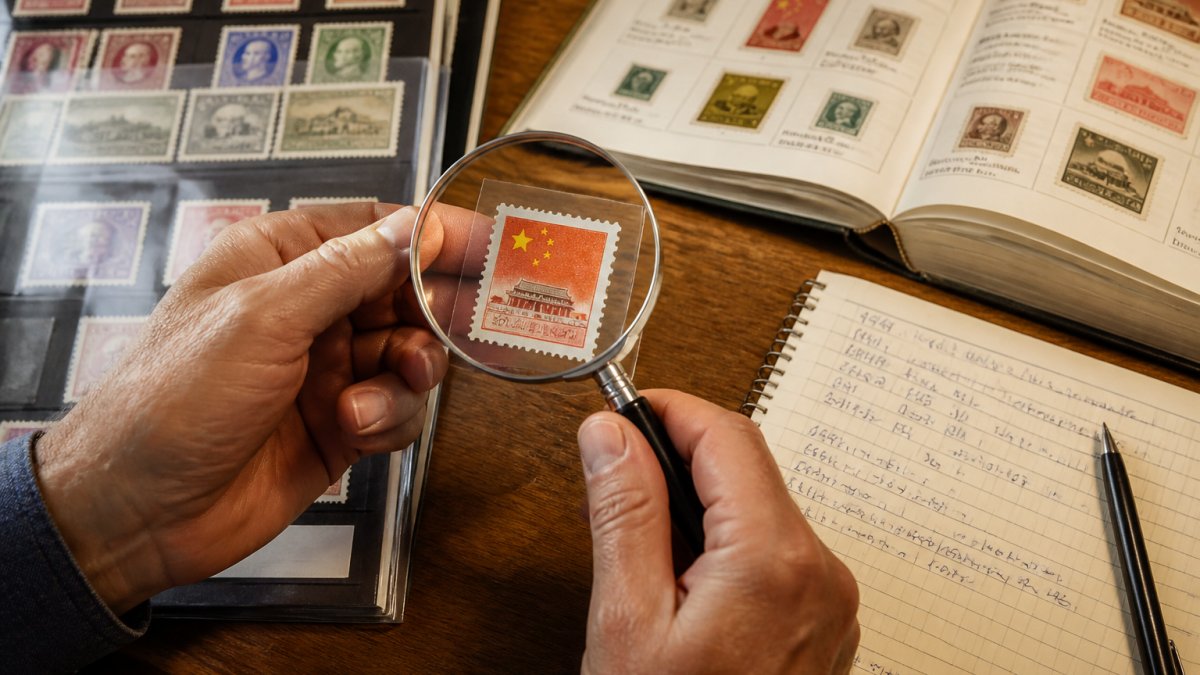
Stamps from this 58-year window document pivotal moments: the PRC's 1949 establishment, the Great Leap Forward, the Cultural Revolution (1966-1976), and the modernization era that followed. Each period produced distinct designs, printing methods, and rarity profiles.
What makes this period valuable is the combination of historical significance and scarcity. Early PRC stamps from 1949-1952 are increasingly difficult to find in Mint Never Hinged condition.
Understanding why you're collecting matters before you start. Are you building a comprehensive chronological collection, focusing on themes like political history or wildlife, or seeking investment-grade rarities? Your answer determines which stamps deserve priority.
How to Identify Chinese Stamps: Authentication and Period Recognition
Identifying Chinese stamps accurately is non-negotiable before any purchase. Many collectors discover too late that a supposed rare original was a reprint or counterfeit.
Spotting Counterfeits and Reprints
Counterfeits and reprints plague the 1949-2007 market more than most collectors realize.
Start with paper quality. Original PRC stamps from 1949-1952 used specific paper stocks that changed over time, with early issues on thinner, whiter paper than later printings.
Examine the perforation holes. Early PRC stamps have characteristic perforation patterns. Counterfeits frequently have irregular spacing or slightly different hole sizes.
Color is another authentication marker. Original Cultural Revolution stamps (1966-1976) used specific ink formulations, with reds that are slightly orange-red rather than pure crimson.
Reading Catalogue Numbers and Issue Dates
Every Chinese stamp has a catalogue number indicating when it was issued and its position in the series. Reading these numbers is essential for verification and valuation.
For PRC stamps, specialized catalogues and references are invaluable.
A stamp numbered "PRC 1" is the very first stamp issued by the People's Republic of China in 1949. Stamps numbered PRC 1-7 represent that inaugural series.

Issue dates appear alongside each catalogue number. Cross-reference the stamp's design, color, and perforation against the entry; a mismatch signals misidentification or potential forgery.
Chinese Commemorative Stamps by Year: What to Prioritize
Which stamps to acquire when building 1949-2007 Chinese stamp collections depends on your budget, goals, and the periods that interest you most. Different decades present different opportunities and challenges.
Early PRC Issues (1949-1952)
The earliest Chinese stamps carry extraordinary historical weight. The first series issued in 1949 featured Mao Zedong and the gate of Tiananmen. These stamps (PRC 1-7) are foundational to any serious 1949-2007 collection.
Stamps from 1949-1952 are increasingly scarce in Mint Never Hinged condition; many were heavily used for postage. Finding complete sets without damage or hinges is genuinely difficult, and prices reflect that scarcity.
Cultural Revolution and Political Series (1966-1976)
The Cultural Revolution period (1966-1976) produced some of the most visually striking and historically significant Chinese stamps ever issued, documenting Mao's campaigns with bold designs and powerful historical context.
Cultural Revolution stamps present authentication challenges: counterfeits are common because demand and prices are high. Before acquiring any, verify its catalogue number, examine paper quality under magnification, and request provenance documentation from the seller.
This era also offers collecting opportunities at various price points. Some Cultural Revolution series are accessible to collectors with modest budgets.
Reform Era and Modern Sets (1978-2007)
The reform era (1978-2007) brought more diverse stamp subjects and improved printing quality, documenting China's modernization: economic development, cultural achievements, and international participation.
Stamps from 1978-2007 are generally more available than early PRC issues, making them excellent for building comprehensive collections, and complete sets are often obtainable without astronomical expense. Genuine challenges remain, though: some commemorative series with limited original printings are scarce.
Many collectors treat the reform era as a foundation for their 1949-2007 acquisition strategy: build depth here first, then work backward toward scarcer early issues as expertise and budget grow.
Understanding Chinese Stamp Values and Market Pricing
Stamp values fluctuate based on multiple factors. Understanding what drives pricing helps you make informed decisions and avoid overpaying.
Rarity, Condition, and Price Drivers
Rarity is the primary price driver: a stamp issued in limited quantities commands more than one issued in millions. Catalogue rarity ratings (common, scarce, rare) provide guidance, but actual prices depend on current collector demand.
Condition dramatically affects value: a superb Mint Never Hinged stamp costs substantially more than the same stamp with a hinge mark or slight color variation. Investment-grade collectors prioritize condition above all else.
Demand for specific series fluctuates. Cultural Revolution stamps see periodic surges; early PRC issues maintain consistent demand because they're foundational. Tracking market trends helps you spot opportunities as collecting interests shift.
Budget-Based Collection Planning
Serious collecting doesn't require unlimited funds. Strategic planning lets you build meaningful collections at various budget levels.
If you have a modest budget, focus on filling gaps in the reform era (1978-2007). This approach builds breadth while managing expenses.
With a moderate budget, you can acquire select Mint Never Hinged stamps from early periods alongside comprehensive reform-era coverage.
Collectors with larger budgets can pursue comprehensive Mint Never Hinged coverage across all periods, including scarce variants and special printings. Investment-grade collections at this level require deeper expertise in authentication and market valuation.
| Budget Range | Collecting Strategy | Primary Focus | Timeline |
|---|---|---|---|
| $500-$2,000 | Foundation building | Used stamps, reform era (1978-2007) | 12-18 months |
| $2,000-$10,000 | Selective MNH acquisition | Key early issues + comprehensive modern | 18-36 months |
| $10,000+ | Investment-grade depth | Rare MNH across all periods | 24+ months |
Buy Chinese Stamps Online: Safe Acquisition and Verification
Purchasing 1949-2007 Chinese stamps online requires caution. The digital marketplace offers access to rare material but also presents risks if you don't verify seller credibility and condition before committing funds.
Evaluating Seller Credibility and Provenance
Established dealers with transparent track records are your safest acquisition source. Look for dealers who specialize in PRC stamps and can provide detailed provenance information.
At PRC China Stamps, we've built our reputation on transparency.
Before purchasing from any online source, verify credentials. How long has the dealer been in business? Do they offer guarantees on authenticity? Can they provide references from other collectors?
Request detailed photographs showing the stamp under magnification. Legitimate sellers provide clear images from multiple angles. Ask specific questions about condition, printing variations, and catalogue references.
Condition Grading and What to Inspect Before Purchase
Understanding condition grading standards protects you from overpaying for stamps that don't match their described condition.
For Mint Never Hinged stamps, examine hinge marks carefully. Any hinge remnant significantly reduces value.

Inspect color consistency. Fading or oxidation reduces value.
Check for thins (areas where paper has worn thin) or tears. These damage the stamp's value substantially. Request high-magnification photographs if you're uncertain about condition.
Before finalizing any purchase, ask about the seller's return policy. Reputable dealers offer authentication guarantees and return windows.
Building Your 1949-2007 Collection: Period-by-Period Strategy
Successful collectors approach their acquisitions strategically rather than randomly. A period-by-period plan ensures you build a coherent, valuable collection that makes sense historically and philatelically.
Finding Rare and Valuable Chinese Stamps
Rare stamps require patience and persistence to locate. Set specific acquisition targets, particular series, years, or design themes, and search methodically. Online marketplaces, dealer websites, and specialized auctions are your primary sources.
Specialized auctions focused on Chinese stamps occur regularly. PRC China Stamps facilitates June and November Chinese Stamp Auctions where serious collectors compete for high-value material.
Build relationships with dealers who understand your collecting interests. When you communicate what you're seeking, reputable dealers alert you when relevant stamps become available. This approach often yields better results than random browsing.
Filling Gaps and Completing Sets
Most collectors find that completing sets is more satisfying than acquiring random individual stamps. Identify which series you want to complete, then systematically acquire missing stamps.
Some sets are more obtainable than others. The 1978-2007 reform era offers numerous complete sets at reasonable prices.
Track which stamps you need using a checklist or spreadsheet. This prevents duplicate purchases and keeps you focused on genuine gaps. As you acquire stamps, mark them off and celebrate completing sets, this is where collecting becomes genuinely rewarding.
Storage, Insurance, and Long-Term Care
Protecting your collection ensures it maintains value and condition for years. Proper storage prevents deterioration, and insurance protects against loss or theft.
Store stamps in archival-quality albums or stock books designed specifically for philatelic materials.
Maintain stable environmental conditions. Extreme temperature fluctuations and humidity variations cause damage. Store your collection in a cool, dry location away from direct sunlight.
Insurance protects your investment. Homeowner's insurance typically doesn't cover collectibles adequately. Specialized collectibles insurance policies cover Chinese stamps at their appraised value.
Building a meaningful 1949-2007 Chinese stamp collection is a rewarding pursuit that combines history, art, and investment.
Frequently Asked Questions
Which Chinese stamps from 1949-2007 are the most valuable?
Early People's Republic of China stamps from 1949-1952, especially the first issues and rare Peking prints, command premium prices. Cultural Revolution stamps (1966-1976) are highly sought after due to their historical significance and limited surviving examples in Mint Never Hinged condition. Specific series like early commemoratives documenting political events fetch high values. Rarity, condition, and catalogue demand determine final market value. Check specialized catalogues and recent auction results to assess current pricing for the specific issues you're targeting.
How can I tell if a Chinese stamp is genuine or a counterfeit?
Genuine PRC stamps have consistent ink color, precise perforations, and correct paper texture matching their period. Counterfeits often show fuzzy printing, irregular perforation holes, or incorrect catalogue numbers. Reprints, legitimate reissues by China Post, carry different markings or slightly altered designs compared to originals. Use a magnifying glass to inspect printing quality and perforation alignment. Compare your stamp against images in a specialized catalogue and consult authentication resources.
What should I check before buying a Chinese stamp collection online?
Verify the seller's credentials, return policy, and authentication guarantees. Request detailed photos showing the stamp's front, back, and perforations under magnification. Confirm Mint Never Hinged status, check for original gum and no hinge marks. Ask for condition grading details and catalogue numbers for each item. Review the seller's feedback and history with collectors. Understand shipping and insurance coverage for valuable items. If purchasing rare or high-value stamps, prioritize sellers offering money-back guarantees and transparent provenance documentation.
How should I organize Chinese commemorative stamps by year in my collection?
Arrange stamps chronologically by issue date, grouping them into major historical periods: Early PRC (1949-1952), Transition Era (1953-1965), Cultural Revolution (1966-1976), and Reform Era (1978-2007). Use a specialized catalogue as your reference for exact issue dates and series groupings. Store each period in separate protective sleeves or albums, clearly labeled with catalogue numbers. This organization helps you identify gaps, track duplicates, and assess your collection's completeness. It also simplifies valuation and makes trading or selling specific periods easier.
Are 1949 stamps worth anything, and how much should I expect to pay?
Yes, 1949 stamps are among the most valuable Chinese issues because they mark the People's Republic's founding. First issues and rare printings from this year can cost hundreds to thousands depending on rarity and condition. Mint Never Hinged examples cost more than used or hinged versions. Check recent auction results and dealer listings to gauge current market prices for the specific 1949 stamps you're seeking.
What is the difference between Mint Never Hinged and other stamp conditions?
Mint Never Hinged (MNH) stamps have never been mounted in an album and retain their original gum in perfect condition, these command the highest prices. Mint Hinged stamps have original gum but show hinge marks where they were once mounted, reducing value. Used stamps have been postally cancelled and are worth less. Fine and Very Fine condition ratings indicate the stamp's visual appearance, separate from hinge status. For serious collectors and investors, MNH examples are the standard, especially for rare 1949-2007 Chinese stamps where condition directly impacts market value.
Where can I find specific missing stamps to complete my PRC collection?
Specialized online dealers focusing on Chinese stamps often maintain searchable inventories of rare and hard-to-find issues. Auction houses regularly feature PRC stamps, giving you access to items held by liquidating collectors. Join stamp collector forums and networks where members buy, sell, and trade directly. Attend dedicated Chinese stamp auctions held throughout the year. Work with dealers who source from investor liquidations, they often acquire complete collections and can help you locate specific gaps. Be patient and persistent; some rare stamps may take months to locate at reasonable prices.